Blue light eyewear

Blue Light Glasses

Most blue light glasses look like something a pharmacist handed you: thin wire, an amber cast, nothing you'd choose on purpose. These aren't that.

Every frame here is one of ours, the same Titan, Opus and Authentic II you know as sunglasses, fitted with a near-clear lens that filters the high-energy end of the blue spectrum and blocks UV to 400 nm. Everyday comfort designed to help reduce eye strain.

  • 1-year warranty on every frame
  • 14-day returns from the delivery date
  • Free shipping over $200 within the United States

How a blue light lens is built

  • blue_light_titan_frames

    What the filter does

    The filter is built into the lens during manufacture, not layered on the outside, so there is nothing to peel, haze, or wear thin. It filters over 95% of light at 410 nm and roughly two-thirds at 420 nm, tapering off by 430. UV is blocked to 400 nm entirely.

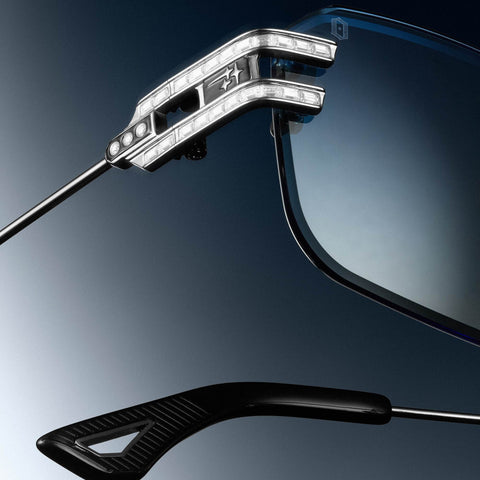
    Blue Light Titan
  • blue-light-gold-opus-rimless

    Frame materials

    Italian acetate or 18k gold-plated stainless steel, cut from the same stock as our optical range. We didn't downgrade the frame because the lens is clear. If anything you'll notice the hardware more without a dark lens hiding it.

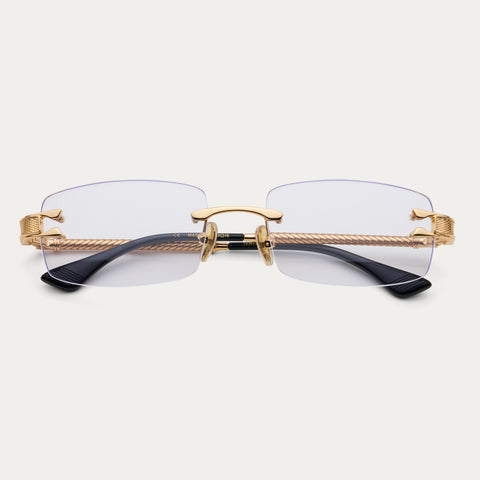
    Blue Light Opus
  • blue-light-lens-authentic-ii

    Why the lens stays near-clear

    Cheap blue light lenses get there by turning everything amber. Ours doesn't. It's a Category 0 lens, the same class as untinted optical lenses, with over 92% light transmission. Your screen looks like your screen, and you can drive in them day or night.

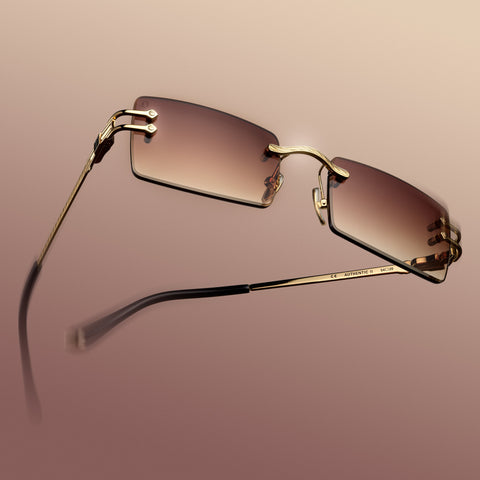
    Blue Light Authentic II

How James Oro blue light glasses compare

How James Oro blue light glasses compare
FeatureJames Oro Typical mass-market pair
Lens tintPasses colour-recognition tests in three international standards Near-clear. Category 0, the same class as untinted lenses. Often a visible yellow or amber cast, because tinting the lens is the cheapest way to filter blue light
How the filter is builtTested to ANSI Z80.3, EN ISO 12312-1 and AS/NZS 1067.1 Built into the lens during manufacture, not layered on. Filters over 95% of light at 410 nm and about two-thirds at 420 nm. Frequently a surface film added after the lens is cut. Prone to scratching and clouding at the edges.
UV protectionFrom the independent lens certification Full UV400. 0% UVB, under 0.1% UVA. Rarely tested or stated
Frame materialListed on every product page Italian acetate or 18k gold-plated stainless steel Injection-molded polycarbonate, usually unbranded
Hinges Five-barrel or spring-loaded metal Molded plastic. When they snap, the pair is done.
WarrantySee the warranty page for what is covered One year on every frame, handled by us, not a marketplace Often none. When it exists, it is through a marketplace, not the maker.

Blue light lenses, answered

How much blue light do these actually filter?

It depends on the wavelength. Almost all of it below 410 nm, about two-thirds at 420 nm, tapering off from there. Across the full 380–500 nm blue band it comes to roughly 25%.

The lens is independently tested to ANSI Z80.3, EN ISO 12312-1 and AS/NZS 1067.1, and we publish the numbers because most brands don't.

Do these have a yellow tint?

Not the amber cast you've seen on cheap blue light glasses. The lens is Category 0, the clear class, and passes every colour-recognition test in three international standards. Held against a pure white screen there is a faint warmth, which is what filtering the violet end of the spectrum looks like. On your face, nobody clocks it. If you want to check, the transmittance numbers are in the FAQ above.

Can I wear these as everyday glasses?

Yes. The lens is Category 0, the same class as untinted optical lenses, with 92.6% light transmission. It passes the colour-recognition and night-driving tests in ANSI Z80.3, EN ISO 12312-1 and AS/NZS 1067.1, so you can drive in them after dark. No prescription is needed; they ship as plano (zero power) lenses. Most people wear them as their clear pair and stop thinking about the filter.

Do blue light glasses actually work?

Two different questions hide in there. Does the lens filter blue light? Yes, measurably. It filters over 95% of light at 410 nm, about two-thirds at 420, tapering off from there, and blocks UV to 400 nm. That's tested and we publish the numbers.

Does filtering that band change how your eyes feel at the end of a screen day, or how you sleep? The research hasn't settled it, and we're not going to settle it for you. What we can tell you is what the lens does, what the frame is made of, and who to call if something breaks.

Is the filter a coating that can wear off?

No. The filter goes into the lens during manufacture, inside the lens stack, not as a layer on the outside. It can't peel, flake or rub off. The anti-reflective surface on top is a coating, and like any AR coating it rewards being cleaned properly, but the blue light filtering underneath doesn't depend on it.

How should I clean the lenses?

With the Signature Care Kit. It has the microfiber cloth, the lens spray and a screwdriver for when the hinges loosen, in a box that lives in your bag.

Signature Care Kit

What's the difference between "blue light" & anti-glare coatings?

Anti-glare coatings cut reflections; "blue light" filters target a slice of the visible spectrum.